
Lessons from Iran war? Saudi Arabia to buy 20,000 laser guided rockets to counter drones
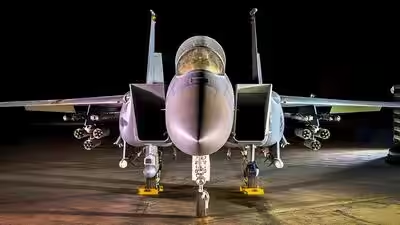
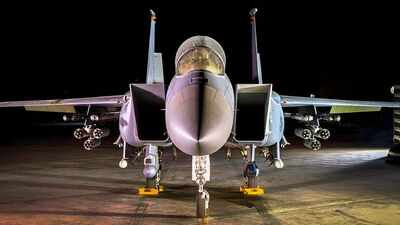
The United States has approved the possible sale of 20,000 Advanced precision kill weapon system (APKWS) II laser-guided rockets to Saudi Arabia in a deal worth $1.96 billion.The proposed sale, cleared by the US state department and notified to Congress, would significantly strengthen the Royal Saudi air force’s ability to conduct precision strikes against both ground and aerial targets while reducing collateral damage. BAE Systems will serve as the principal contractor.The proposed deal includes 20,000 Advanced precision kill weapon system (APKWS) II laser-guided rockets, along with guidance kits, spare parts, training, technical support, logistics support and other equipment needed to operate and maintain the weapons.The Advanced precision kill weapon system II (APKWS II) is a laser-guided rocket system developed by BAE Systems. Rather than being a completely new missile, it adds a laser guidance section between the warhead and the standard 70mm Hydra rocket motor, turning an unguided rocket into a precision-guided weapon. This allows aircraft to strike targets accurately at a much lower cost than conventional missiles.Saudi Arabia wants to buy 10,000 APKWS II air-to-air guidance sections and up to 10,000 air-to-ground guidance sections. The package includes an undisclosed number of LAU-131/A seven-shot 70mm rocket pods, Mk66 rocket motors, Mk-152 high explosive warheads and proximity fuzes.Lessons from Iran war:Iran war began in February 2026 following coordinated US and Israeli strikes on Iran. The opening phase of the campaign targeted Iran’s nuclear facilities, missile infrastructure and senior military leadership, including Iran supreme leader Ayatollah Ali Khamenei, delivering one of the most severe blows to the Islamic Republic since the 1979 revolution.Iran responded with sustained waves of ballistic missiles, cruise missiles and one-way attack drones, targeting Israel as well as military infrastructure across the Gulf including Saudi Arabia. Iran targeted air bases, logistics hubs, air defence sites and critical infrastructure linked to American operations.The war also spilled into the Strait of Hormuz, one of the world’s most critical maritime chokepoints through which around a fifth of global oil and liquefied natural gas trade passes. Iran closed the strait after the conflict escalated and repeatedly targeted commercial shipping using drones and missiles.The war highlighted the growing role of low-cost one-way attack drones in modern warfare. Iran and its regional allies employed drones alongside ballistic and cruise missiles to stretch and overwhelm air defence networks, forcing defenders to rely on expensive interceptor missiles.While many of the drones were successfully intercepted, the campaign showed how sustained drone attacks can quickly deplete missile stockpiles and impose a significant financial burden on defending forces.
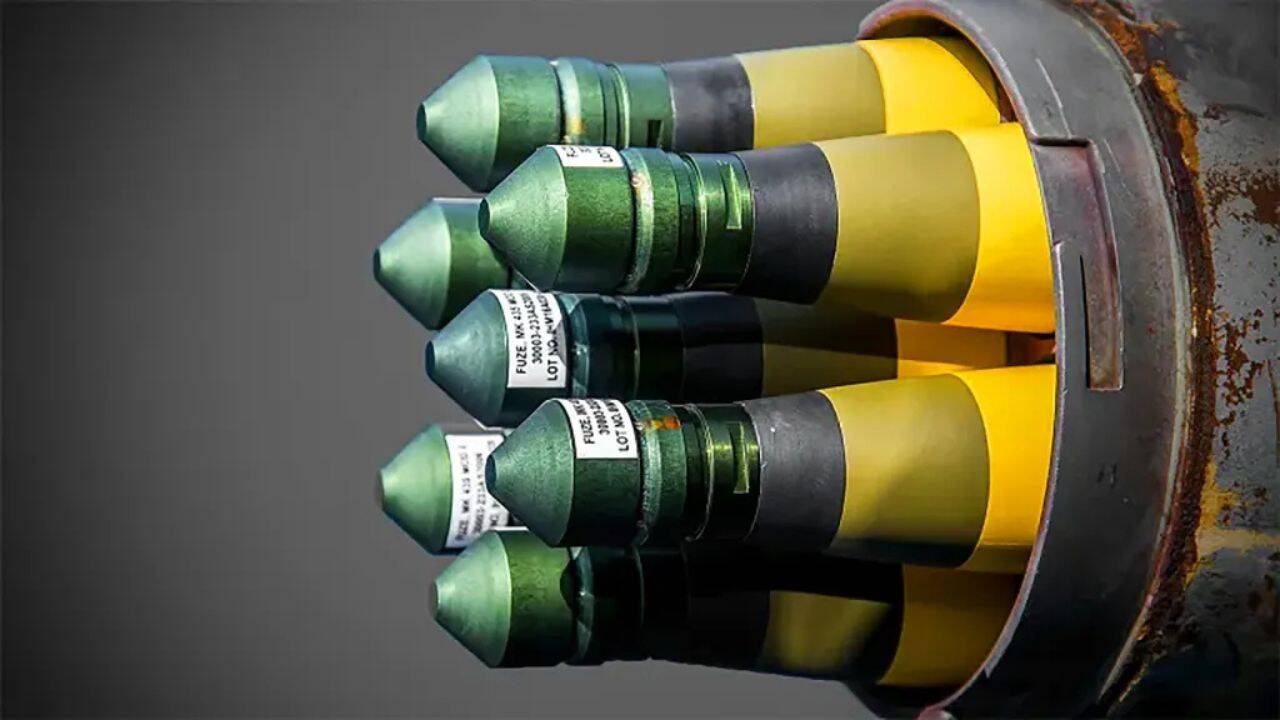
APKWS rockets. Photo credit: USMC
About the Rocket:The latest APKWS developments are designed to address this problem by providing a low-cost precision interceptor for drones and other slow-moving aerial threats.All versions of the APKWS rocket are made up of three basic components: a laser guidance section inserted between one of a variety of warhead options and a standard 70mm rocket motor. This allows existing Hydra rockets to hit targets with high accuracy while retaining their original motor and warhead.According to BAE Systems, APKWS II has a calibre of 70 mm, measures about 1.87 metres in length, weighs approximately 15.8 kg and can employ the full range of standard Hydra 70 warheads, including high-explosive, smoke and illumination variants.Depending on the launch platform, it has a maximum effective range of around 6.5 km when fired from helicopters and up to 14 km from fixed-wing aircraft, while achieving an accuracy of roughly two metres from the designated target. Saudi Arabia is expected to deploy the APKWS II on its AH-64E Apache attack helicopters and F-15SA fighter jets.For Saudi Arabia, a stockpile of 20,000 APKWS II rockets will provide a cost-effective option to counter drones, strike mobile launchers and engage other lightly protected targets without relying on high-end missiles for every engagement.The purchase suggests Riyadh is drawing lessons from recent regional conflicts and investing in weapons designed for sustained operations against the growing threat posed by drones and other asymmetric aerial attacks.