Indonesia is building a brand-new capital in the Borneo jungle to replace sinking Jakarta | World News
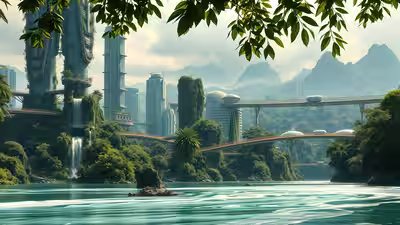
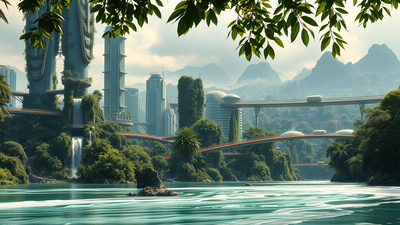
Deep in the rainforest of Indonesia’s Borneo island, construction crews are building an entirely new capital city called Nusantara, a project driven by a problem the current capital simply cannot outrun, the ground beneath Jakarta is sinking. Jakarta, now the world’s most populous city with more than forty million people in its wider metropolitan area, has spent decades battling chronic flooding, worsening traffic and rapidly subsiding land. Rather than trying to fix Jakarta in place, Indonesia’s government has instead chosen to start over, relocating the seat of government roughly a thousand kilometres away to a stretch of East Kalimantan forest, betting that a purpose built, forest integrated city can succeed where retrofitting an existing megacity could not.
Why Jakarta simply cannot keep up with itself
Jakarta’s core problem is not abstract or distant; it is happening steadily beneath residents’ feet. Large parts of the city have relied for decades on residents and businesses drilling their own wells for water, a practice that has drained the aquifers beneath the city and caused the ground itself to gradually collapse and sink. According to NPR’s reporting from the site of the new capital, Jakarta is now the world’s largest city and remains polluted, overcrowded, and sinking, a combination that has pushed the Indonesian government toward the extraordinary step of building an entirely new capital rather than continuing to invest solely in defending the existing one.
What Indonesia’s government has actually built so far
According to the Nusantara Capital City Authority’s own official account of the project, the plan for Nusantara was formally set in motion when Indonesia’s government began development of Ibu Kota Nusantara following years of prior proposals dating back to the Suharto era in the 1990s, when an earlier president had floated relocating government functions away from Jakarta entirely. Construction of the new capital began in 2022, and according to NPR’s on the ground reporting, the city’s core government district is nearly complete, featuring a sprawling green park surrounded by white office buildings, plants draping from balconies, and a striking spaceship shaped bank building alongside the city’s centrepiece government structures.
Why the site was chosen specifically in Borneo
Locating the new capital in East Kalimantan, on the island of Borneo, was a deliberate choice rather than an arbitrary one, driven by both geological and symbolic considerations. The site sits well away from the volcanic and tectonic instability found across much of Java, where Jakarta itself is located, offering considerably more stable ground for large scale, long term construction. According to the Nusantara Capital City Authority, the government has also framed the move as part of a broader effort to reduce developmental inequality between Java, where economic activity and population have long been concentrated, and the rest of Indonesia’s vast archipelago, positioning Nusantara as a more geographically central seat of government for a country spread across more than seventeen thousand islands.
The forest city concept behind Nusantara’s design
Rather than simply clearing land and building a conventional city, Indonesia’s official plans for Nusantara describe an approach explicitly built around integration with the surrounding forest rather than replacement of it. According to the Nusantara Capital City Authority, the forest city concept underpinning the project requires at least 65 percent forest cover across the capital, to be achieved partly through rehabilitating tens of thousands of hectares of already degraded land, former mining sites and existing forest concessions rather than clearing additional untouched rainforest. The same official planning framework describes targets for the government zone including more than 75 percent green open space, with the stated aim of ensuring all residents can reach recreational green space within a ten minute walk.
Why the project has faced serious doubts along the way
Despite the ambition behind Nusantara’s design, the project has run into real and persistent challenges since construction began. According to NPR’s reporting, state funding for Nusantara was cut in half for 2026 compared with the previous year, and questions have grown about whether current President Prabowo Subianto, who took office in October 2024, shares the same enthusiasm for the project as his predecessor Joko Widodo, under whom the capital relocation was originally announced. Basuki Hadimuljono, the head of the Nusantara Capital City Authority, has pushed back directly against speculation that the city could become a so called ghost city, telling NPR that the project will be continued, while confirming that construction of the legislative and judicial buildings is expected to be completed within the coming year.
What still needs to happen before Nusantara truly functions as a capital
Even with its government district nearing completion, Nusantara remains a long way from functioning as a fully fledged capital city capable of supporting the population Indonesia ultimately envisions for it. According to NPR, plans call for moving several thousand more civil servants to the city this year alone, a modest step compared with the roughly 1.2 million residents the government hopes to eventually relocate there, and essential infrastructure including schools, permanent housing for married civil servants, shopping centres and other everyday amenities remains largely unfinished. President Prabowo has signed a presidential regulation designating Nusantara as Indonesia’s political capital by 2028, with plans for the president himself to finally relocate there once the legislative and judicial buildings are complete, a target that will offer the clearest test yet of whether Indonesia’s decade long gamble on a brand new jungle capital can genuinely replace the sinking city it was built to leave behind.