In eastward engagement, energy takes priority in Modi’s three-nation tour
Prime Minister Narendra Modi has arrived in Jakarta, the first stop of a six-day tour of Indonesia, Australia and New Zealand that is expected to yield prospective arrangements spanning critical minerals, defence and clean energy. This tour can be read as a decisive shift in India’s diplomatic rationale toward the Eastern Maritime Zones of the Indian Ocean. This is an attempt to stitch together separate regional security complexes into a strategic space in which India seeks a powerful standing rather than acting as an external balancer. Beyond the familiar lenses of trade, defence cooperation and diaspora, a deeper logic is at play under the Act East framework, that is, anchoring the Indo-Pacific within its long-term energy security strategy with focus on critical minerals, supply-chain resilience and emerging technologies.
Prime Minister Modi, during the inauguration of India’s first greenfield refinery in a decade at Balotra on 4th July, described the West Asia conflict as having triggered ‘the biggest energy crisis of the 21st century,’ crediting India’s success in weathering it to timely decision-making, effective diplomacy and prudent management of national resources. Thus, the timing of the visit is significant.
Building self-sufficiency at home and diversification abroad constitute the twin pillars of India’s contemporary energy security strategy. India’s ambition under the Critical Minerals Mission, the Green Hydrogen Mission, PLI Scheme for Advanced Chemistry Cell Batteries and the broader vision of Viksit Bharat 2047 require such diversification and partnership. In the earlier phases of the Act East Policy focused on highways, ports, and physical connectivity, but the current phase is defined by energy infrastructure and securitisation. China has also tightened export controls on rare earth elements throughout 2025. Restrictions introduced in April 2025 were progressively expanded throughout the year, widening their reach to internationally manufactured products. India’s dependence on this supply chain was heavy.

Pillars of India’s energy security, which is no longer just about affordable supply, rests on sovereignty, robustness, and resilience. Indonesia’s nickel and biofuel enhance supply diversification, Australia’s mineral inputs account for technological and industrial robustness and New Zealand’s renewable innovation fosters long term resilience. Read together, these three engagements represent a coherent attempt by India to pursue all three dimensions at once and construct a resource architecture across the region which will provide material foundations for its long-term energy transition.
The sequencing of the visit is equally important. Moving from Jakarta to Melbourne to Auckland traces a maritime arc from the Indian Ocean into the Pacific. This stitch provides a base for weaving a prospective Indo-Pacific energy architecture into three discrete bilateral agreements. India can engage these countries through two forms of cooperation: first, collaboration in energy technologies can strengthen India’s domestic industrial capabilities; second is the development of an Indo-Pacific clean energy transmission architecture which can enable greater cross-border connectivity, diffusion of technology and integration of renewables across South and Southeast Asia.
Against this backdrop, Modi’s three-nation tour has the potential to address different flanks of India’s energy security.
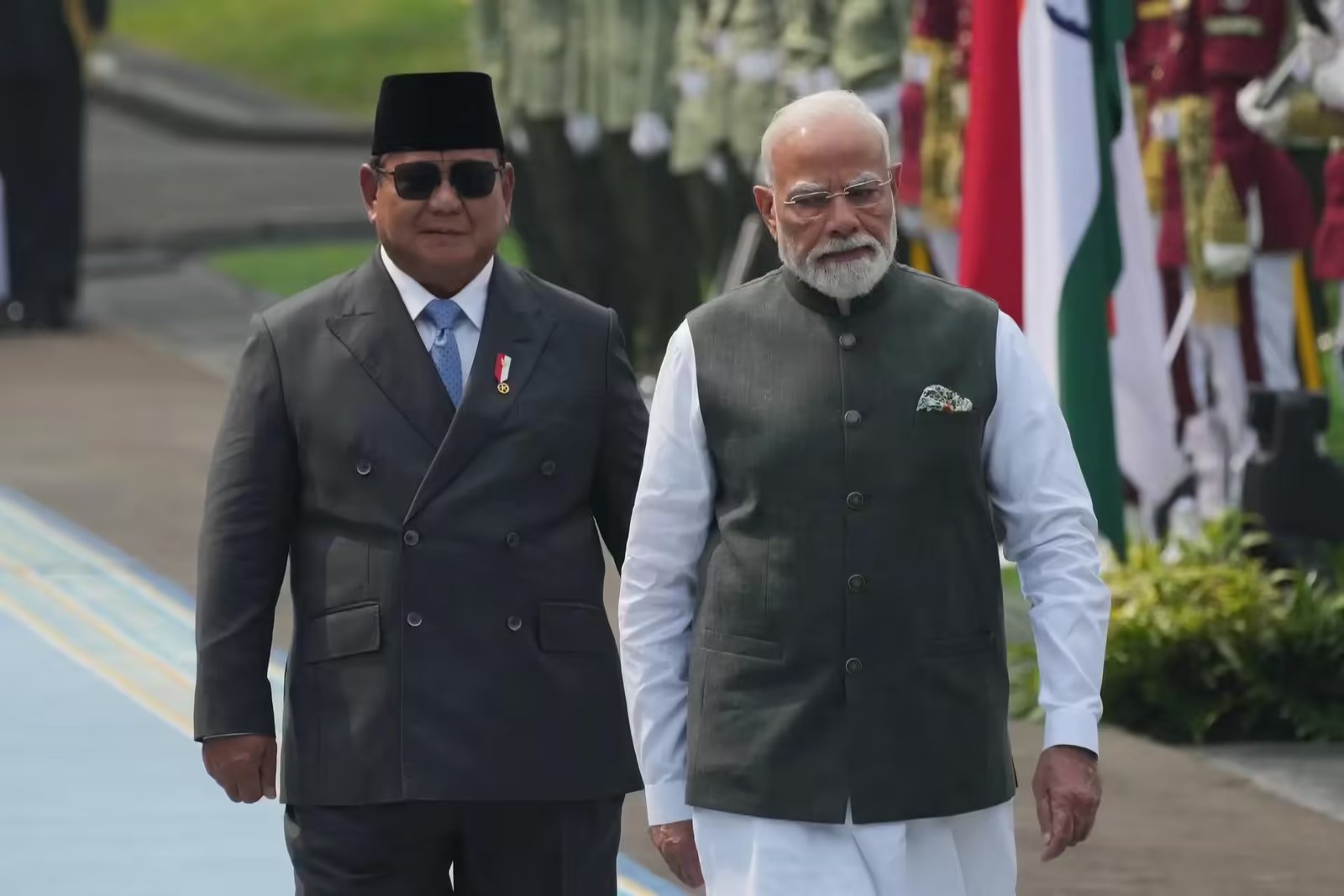
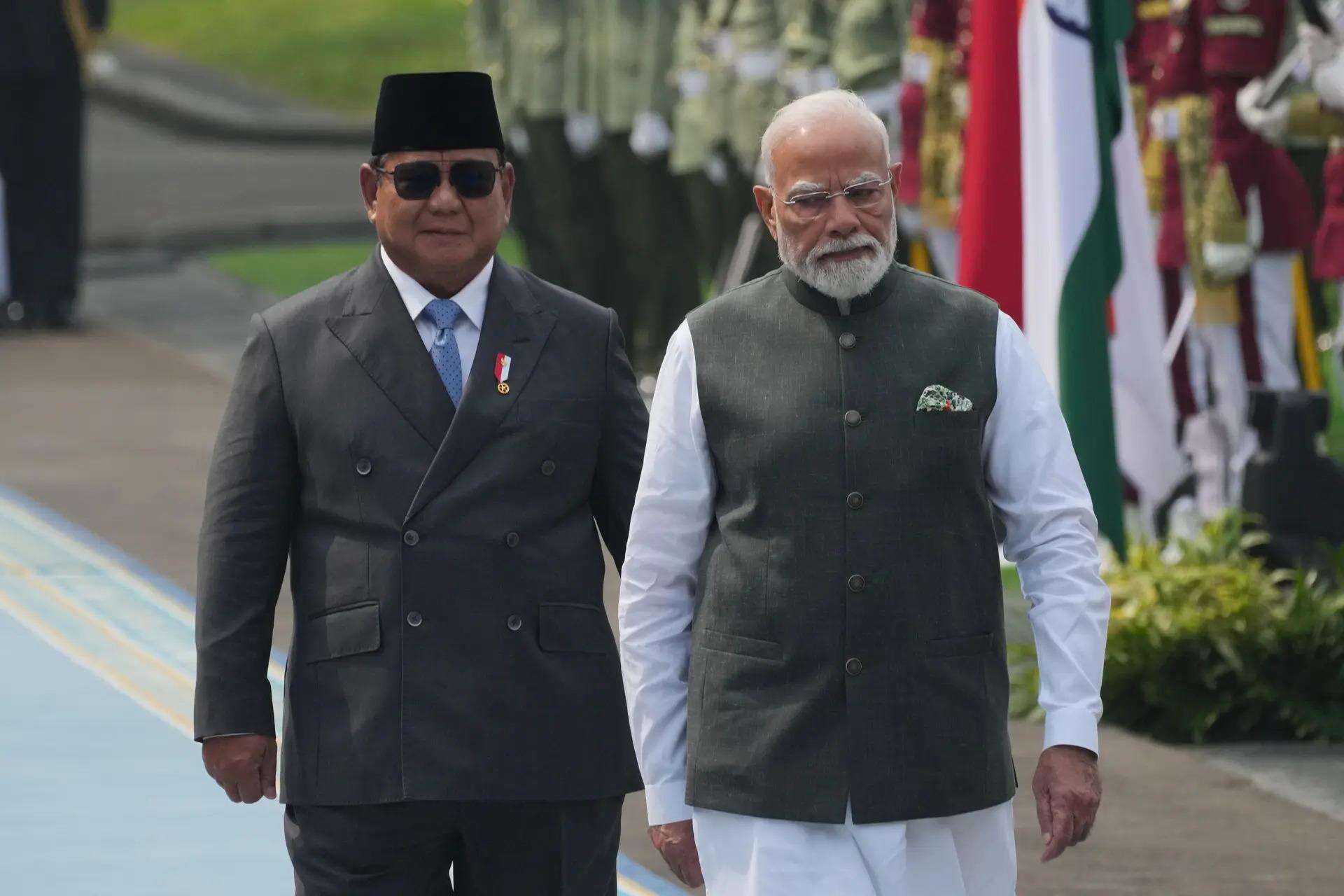
As PM Modi reached Indonesia, President Prabowo Subianto conferred upon him Indonesia’s highest honour, the ‘Bintang Adipurna of the Republic of Indonesia’. Talks are now set to begin. The country offers coal and biofuel cooperation that diversifies fossil supply away from a single maritime corridor. It sits astride the Strait of Malacca, which carries one-quarter of global traded goods and remains one of the most important energy chokepoints linking the Indian Ocean with the South China Sea. It also holds the world’s largest nickel reserves and supplies roughly 60 percent of global mined nickel, a critical input for EV batteries. Ahead of the visit, Indian officials confirmed New Delhi is negotiating joint ventures with Indonesian firms to build nickel processing capacity, seeking to dilute a supply chain in which China currently controls roughly 75 percent of Indonesia’s refining capacity.
Australia represents the future of clean energy as it has critical minerals that can accelerate electrification and reduce dependence on oil. Here, the parameters of energy partnership are most institutionally developed. The Indo-Australia Critical Minerals Investment Partnership was launched in 2022, followed by tariff elimination on critical mineral products. The country has become an important partner in securing supplies of lithium, cobalt and rare earth minerals required for electric vehicles and semiconductors in India, which provides strategic balancing vis-a-vis China. In 2024, the Indo-Australia Renewable Energy Partnership sought to target solar manufacturing, back-end mineral processing, green hydrogen and green iron, together constituting the bilateral critical minerals relationship at an advanced level of partnership. The expansion of the Australia-India Strategic Research Fund to nearly Australian $4 million annually has renewed the focus on clean energy and mineral processing technology.
The strength of New Zealand lies in technological expertise rather than resource endowments. Around 80 to 85 percent of its electricity is generated from renewable sources, primarily hydroelectricity, geothermal and wind, with the government targeting a renewable electricity system by 2035. Hence the Auckland leg is important as it offers a working template of a renewable-based grid that India’s own energy transition can draw on. Furthermore, while the recent trade agreement concluded in April, 2025 focuses on the elimination of tariffs on dairy and agricultural technology, it creates a natural entry point for energy and bio-fuel research. With this, the first visit by an Indian Prime Minister in four decades creates the political momentum required to institutionalise cooperation.
As the clean energy transition demands participation across the value chains, this visit can support India’s ambition to emerge as a manufacturing and processing hub for clean energy technologies. Additionally, energy cannot be stockpiled or substituted at short notice. Its infrastructure, such as pipelines, tankers, straits and refineries, is fixed and therefore vulnerable to chokepoints. This framing of the supply chain as a vulnerability rather than market inefficiency calls for a securitization perspective. The weaponised or geo-economic interdependence shows that these chokepoints in global networks can be leveraged cohesively.
Furthermore, it entails a broader aspiration to diversify strategic dependencies without reproducing bloc politics. India’s push to diversify away from a dominant hub amounts to this strategy of reducing dependence without exiting the network altogether. It shows how countries increasingly seek resilience, thereby supplementing a multipolar economic order. More importantly, as energy independence remains an elusive goal, what countries seek instead is energy insurance. It calls for a diversified portfolio of suppliers, technologies, transport routes and strategic partnerships capable of absorbing shocks.
At last, the visit marks an important conceptual shift. Broadly, India would benefit from treating these three legs as part of a coherent energy strategy under the Act East Policy umbrella. This would further give energy the institutional visibility that defence and trade enjoy, marking India’s transition from practising energy diplomacy to shaping institutions and partnerships that will govern the Indo-Pacific’s clean energy future. Thus, far from being a routine diplomatic outreach, the visit to Indonesia, Australia and New Zealand will reflect India’s attempt to build a resilient Indo-Pacific energy architecture.
Disclaimer
Views expressed above are the author’s own.