Government to form cooperative life insurance company: Amit Shah | India News
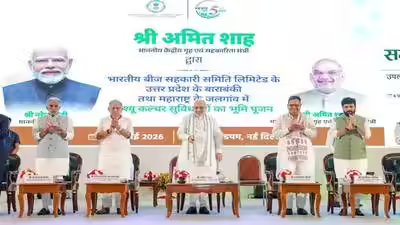
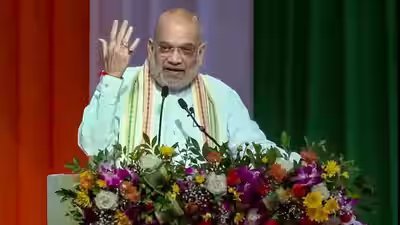
NEW DELHI: Union home and cooperation minister Amit Shah on Monday announced a “cooperative life insurance company” will be formed and said the govt is also going to develop ‘utility aggregator cooperative’ in the coming days on the lines of ‘Bharat Taxi’ – India’s first cooperative-led ride-hailing platform.A utility aggregator is a platform that brings together multiple utility services and offers them through a single interface. Such a move may not only help in expanding the footprints of cooperatives in the country but also make them profitable for members.Shah, while addressing an event here to mark the 5th foundation day of the ministry of cooperation, also said Bharat Taxi will become available in more than 500 cities across the country in the coming two years.At present, Bharat Taxi has nearly 6.4 lakh registered drivers and more than 35.7 lakh registered customers, and the service is operational in Delhi-NCR, Lucknow, Chandigarh, Mumbai, Jaipur, Kanpur, Ahmedabad, Rajkot, Somnath and Dwarka.The Bharat Taxi, which operates on a zero-commission model with direct distribution of profits to drivers, will soon be launched in Ranchi, Patna, Guwahati, Bhopal, Kolkata, Indore and Nagpur in the next few months.“On the lines of Bharat Taxi, we are going to further develop the ‘utility aggregator’ cooperative in the coming days. Along with this, we are going to create a cooperative life insurance company, which will strongly take cooperation forward in the insurance sector as well,” Shah said.He noted IFFCO-TOKIO, a joint venture of fertiliser cooperative IFFCO, was already in the insurance business.India has, at present, more than 8.5 lakh cooperatives, with over 32 crore people associated with it as members. About 20% of agricultural credit, 35% of fertiliser distribution and 31% of sugar production are currently happening through cooperatives.Speaking about the importance of creating a separate ministry for this sector five years ago, Shah said the decision pivoted the country’s cooperative movement to new heights, which remained neglected and was subjected to second-class treatment for 75 years, and “infused new life” into the cooperative sector.