Takaichi’s India visit marks the next phase of the India–Japan partnership
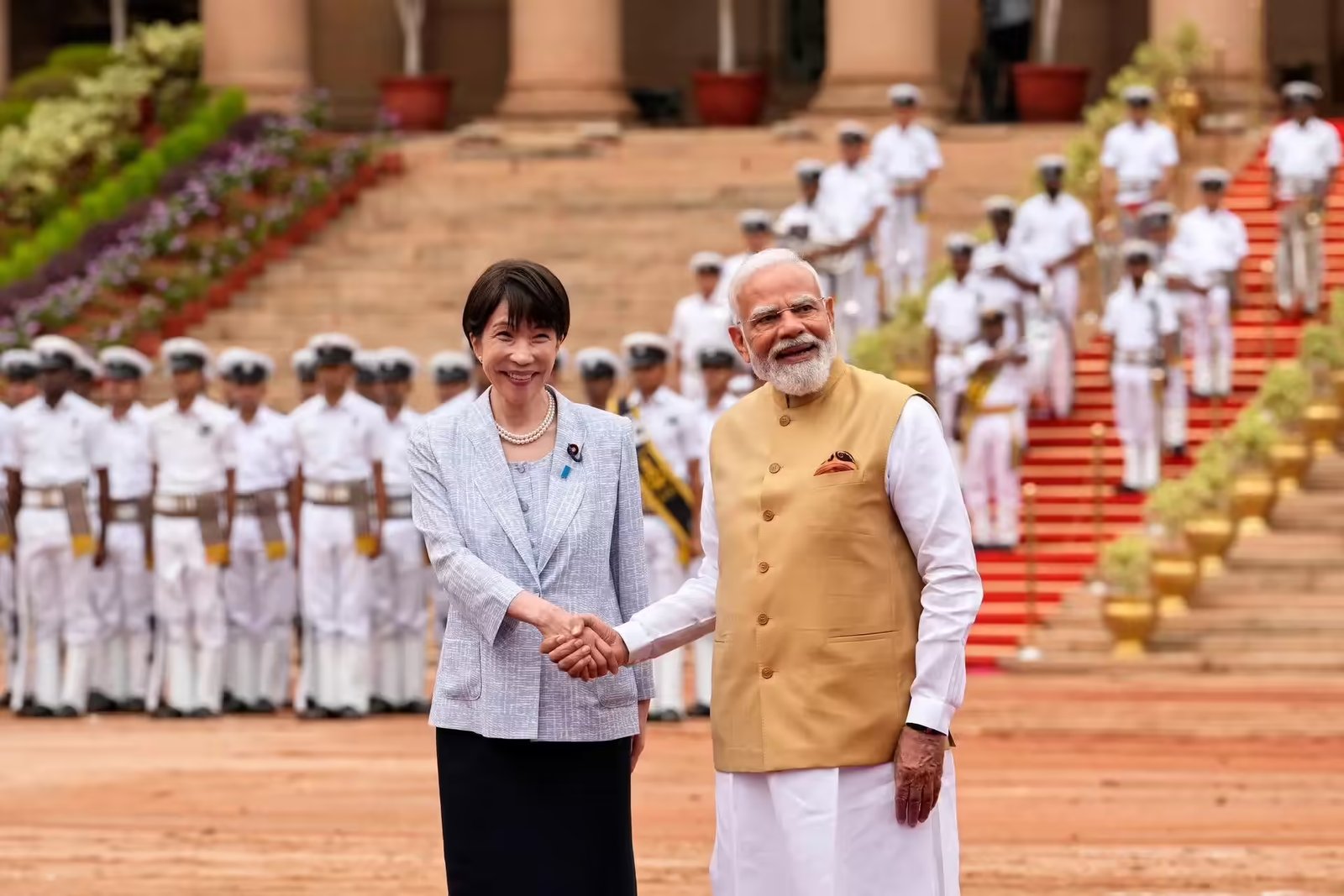
Prime Minister Takaichi is in India for her first visit since coming to power with an overwhelming majority earlier this year. No post-war Japanese prime minister has enjoyed a stronger lower-house mandate than she does today. India shared a close relationship with Shinzo Abe; now it’s time to build an equally consequential one with his heir apparent.
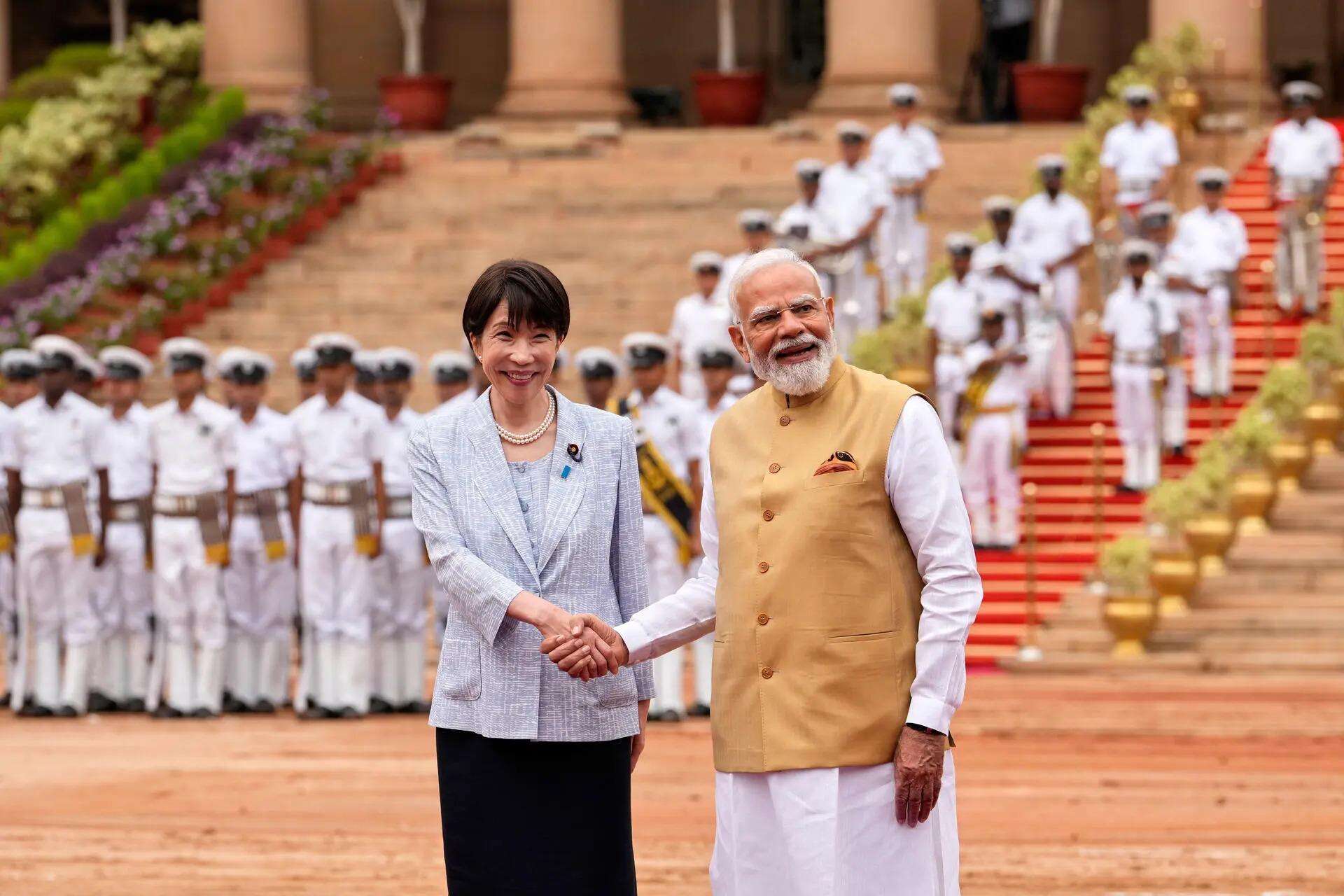

Over the past decade, Prime Ministers Narendra Modi and Shinzo Abe helped create the institutional frameworks and a high level of political trust that underpin the modern India-Japan partnership. With much of that architecture now in place, the priority for both administrations must be to use that foundation to create practical outcomes.
There is little doubt that the relationship has advanced considerably. It has evolved from discussions centred largely on infrastructure and development finance to one that now focuses on economic security, digital cooperation, and advanced technologies. But a deeper assessment of the ties must consider both what was achieved and what remains underwhelming.
Abe’s greatest contribution was not a single agreement but a strategic idea. He argued that the Indian and Pacific Oceans formed a single geopolitical theatre and that India was indispensable to maintaining a free, open and rules-based Indo-Pacific. His vision found expression in the Free and Open Indo-Pacific (which Takaichi recently updated), the Special Strategic and Global Partnership, and a permanent Japanese participation in the Malabar naval exercise.
Ideological affinity aside, the trade and investment pillar has also seen enormous progress. During the Modi-Ishiba summit in August 2025, a private investment target of JPY 10 trillion (around USD 62 billion) from Japan to India for the next decade was announced. This was operationalised with the opening of several new Indian subsidiaries by Nippon Yakin, Ferrotec Corp and Mitsubishi in the last fiscal year. Further, state-to-prefecture partnerships have generated useful engagement. Chief Ministers from various states, such as Assam, Meghalaya, Madhya Pradesh, Haryana, Telangana, and Chhattisgarh, visited Japan in 2025 to seek greater investment inflows.
Therefore, this visit, apart from building on the successes, presents an opportunity to address areas where the partnership has underperformed. The 2015 Defence Equipment and Technology Transfer Agreement was intended to catalyse joint defence production, yet no flagship industrial programme has emerged. The 2016 Civil Nuclear Agreement was groundbreaking when it was first signed, requiring approval from the Japanese parliament and conferring on India the recognition of a responsible nuclear actor. Although the agreement allowed for Japanese nuclear material, equipment, and technology to be used in India’s civilian nuclear programme, its use has been commercially modest.
But encouragingly, the conditions for deeper implementation are now more favourable than they were ten years ago. Japan has relaxed restrictions on defence exports, expanded its defence budget, and elevated economic security to a national priority. India has simultaneously accelerated semiconductor manufacturing, defence indigenisation, and clean-energy deployment. The policy priorities of both governments have never been more closely aligned.
Moreover, Takaichi’s encounters with India began well before she was elected Prime Minister. In 2023, as the minister responsible for health and medical strategy, Takaichi co-chaired the second India–Japan Joint Committee on Healthcare, advocating for deeper collaboration between the two countries. Later, during Takaichi’s tenure as the Economic Security Minister in 2024, the industrial and technological action plan placed India prominently within Japan’s strategy for strengthening partnerships beyond the G7.
Perhaps the most enduring significance of the visit is what it says about continuity. Japanese politics has seen frequent prime ministerial changes over the past two decades, yet India’s importance has remained constant across administrations. From Junichiro Koizumi to Shinzo Abe, Fumio Kishida, and now Sanae Takaichi, Tokyo’s assessment of India has been remarkably consistent. India is viewed not only as a large market or an aid recipient but also as an indispensable strategic partner in shaping the future of the Indo-Pacific.
Therefore, the task before both countries now is to build on that familiarity, supporting a partnership that is capable of delivering economic resilience, technological leadership and regional stability.
Disclaimer
Views expressed above are the author’s own.