Script was hero and humour the icing | Chennai News
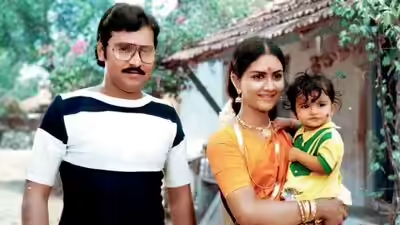
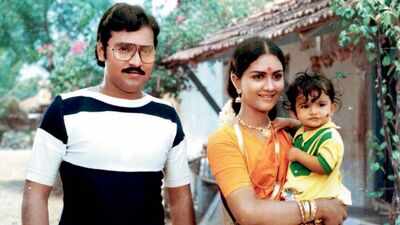
CHENNAI: K Bhagyaraj’s way to audience’s heart—especially of women—was his screenplay. That was his hero—of action, emotion and a fair dose of humour.In the Rajini-Kamal era, Bhagyaraj’s story and screenplay blazed its own trail. He was an ace storyteller who knew the art of making his audience laugh and cry at every frame. His budget for song sequences and allied extravagance was limited. Bhagyaraj proved repeatedly that an engaging script and razor-sharp dialogues could overshadow everything else. Audiences trooped into theatres not just for the actor, but for that signature ‘Bhagyaraj screenplay’.His writing had a unique rhythm. Every scene served a purpose. A seemingly trivial conversation in the first act would become the emotional or comic payoff much later. He mastered the art of planting clues, creating misunderstandings, and resolving them in ways that felt both surprising and inevitable. His screenplays rarely wasted a scene or a dialogue.Bhagyaraj was also unusual for his era in writing female characters with agony, desire, and comic intelligence, not merely as romantic props. In ‘Mundhanai Mudichu’ (1983) we had the assertive pursuer. The film centres on Parimalam, a mischievous village girl who falls in love with a widowed teacher. She marries him by falsely accusing him of having a physical relationship with her, then works to win his love. The premise places the woman as the aggressor and architect of the relationship — a bold inversion for 1983.It is said Bhagyaraj based the story on a real incident involving a friend who had lost his wife, and a woman who loved him despite social gossip. He also introduced Urvashi here, launching one of Tamil cinema’s most enduring careers.‘Chinna Veedu’ (1985)—The Other Woman—was humanised. The title colloquially means mistress. Bhagyaraj had knit the film around his plump wife’s (Kalpana) character with empathy, giving dignity to a woman who weathers down taunts and betrayals to win her good-naïve husband’s love. It marked Kalpana’s debut in Tamil cinema.‘Andha 7 Naatkal’ (1981) is a milestone movie and regarded as his masterpiece. It featured a memorable emotional love triangle in which the female character’s interiority and moral weight drove the narrative—not the men around her.Bhagyaraj introduced ‘Urvashi in Mundhanai Mudichu’ (1983) and launched Kalpana (Urvashi’s sister) with ‘Chinna Veedu’ (1985). Both actresses went on to have majorly successful careers, suggesting he had a genuine eye for female performers and gave them material to work with. His women were rarely victims—they were initiators, survivors, or social anomalies who made the audience uncomfortable in productive ways. For his era, that was quietly radical.In ‘Dhavani Kanavugal’ (1984), women are not passive victims of circumstance. The story revolves around family responsibilities, sisters’ aspirations and the sacrifices required to hold a household together, giving its female characters emotional depth rarely seen in mainstream cinema at the time.Bhagyaraj’s heroines also stood out because they were written as ordinary women. They were teachers, daughters, village girls and middle-class homemakers rather than unattainable fantasies. Their costumes, dialects and body language reflected everyday life, making them instantly relatable to audiences.Humour was his hallmark. His female characters frequently matched—and sometimes outshone—the male protagonist in wit and intelligence. Banter between the lead man and woman became one of the defining features of Bhagyaraj’s films. ‘Suvar Illaadha Chithirangal’, ‘Oru Kai Oasai’, ‘Mouna Geethangal’, ‘Darling, Darling, Darling’, ‘Thooral Ninnu Pochu’, ‘Enga Chinna Rasa’, ‘Oru Oorla Oru Rajakumari’—you name a movie, and you remember only the heroines. Each one was a well-rounded powerful character.This, perhaps, is his greatest contribution—treating women more than just narrative accessories. His heroines could be stubborn, manipulative or impulsive— qualities usually reserved for male characters in commercial cinema. In an era dominated by hero worship, Bhagyaraj quietly created a different kind of stardom.
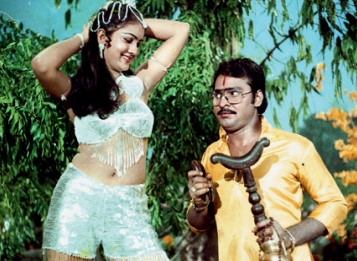
Actor Urvashi, “To help me understand a scene, he would wear a sari himself and demonstrate how she should walk, emote and perform. While I handled emotional scenes with ease thanks to my upbringing in a theatre family, every other aspect of acting—from expressions to body language— was painstakingly taught to me by Bhagyaraj. I wouldn’t be who I am without his guidance. I still think of him every time I sit down for makeup before facing the camera.“
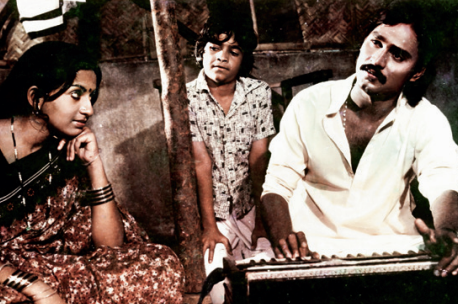
Actor Ambika, “My journey in Kollywood didn’t begin on a promising note. Just when I was searching for that one defining opportunity, Bhagyaraj sir’s ‘Andha 7 Naatkal’ came about and changed everything. The film gave me the break I had longed for and a character that has stayed with me. What touched me even more was the way he addressed me. To the world, I was Ambika. But to him, I was always Vasanthi. In the decades that followed, I can hardly remember him calling me by my real name. To Bhagyaraj sir, I was never just an actress—I was Vasanthi, the character he created. That is one of the most precious compliments a director could give an actor.”
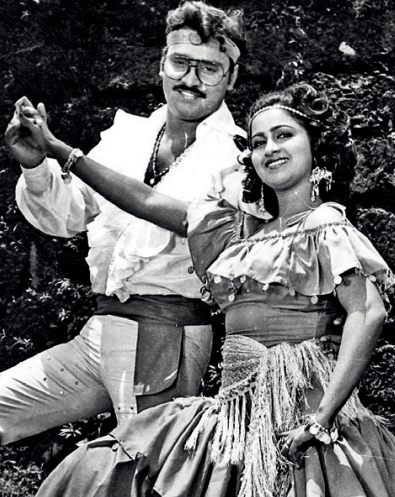
Actor Radhikaa Sarathkumar, “We have worked together in five films. Our mutual respect extended far beyond the sets and continued for decades. Raja and I shared great affection. He would meticulously rehearse every scene, paying close attention to dialogue delivery and timing. And yet, he maintained a relaxed atmosphere on the sets. Our friendship was built on candid conversations, practical jokes and a shared understanding of cinema.“The ‘murungakkai’ in the sambarThe drumstick (murungakkai) became an unlikely cultural symbol in Tamil cinema largely because of K Bhagyaraj, who transformed an ordinary vegetable into a recurring source of sexual innuendo, humour and domestic comedy. In Bhagyaraj’s films of the late 1970s and 1980s, the drumstick was often used as a visual metaphor rather than an explicit joke. Instead of relying on vulgar dialogue, he employed clever symbolism, double entendres and the innocent reactions of his characters. The drumstick became one of his favourite comic devices. The popularity of these scenes was so immense that the phrase “Bhagyaraj murungakkai comedy” entered Tamil pop culture. Even today, references to drumstick humour in Tamil films invariably evoke Bhagyaraj’s screenplay style.Raghu ThathaThat one mistaken phrase became one of the most celebrated comedy dialogues in Tamil cinema. The scene features a Hindi teacher trying to coach a reluctant Tamil student. No matter how many times the teacher corrects him, the student cannot say “rehta tha” and instead says “Raghu thatha” (grandfather), turning a simple Hindi sentence into complete gibberish. Bhagyaraj builds the humour through repetition, the teacher’s growing frustration, and the student’s complete innocence rather than slapstick. Years later, Bhagyaraj explained that the scene was meant to mirror the resistance to the language expressed by Tamil Nadu students during the anti-Hindi agitations of the time.