
Quote of the day by Democritus: “Good means not merely not to do wrong, but rather…” – the ancient idea that real goodness is about what you want, not just what you do |
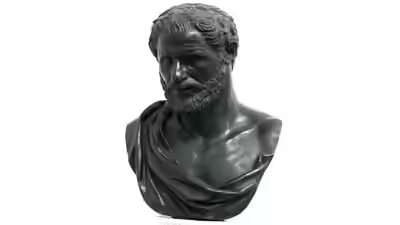
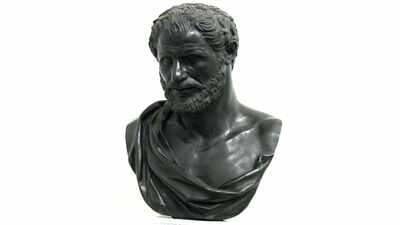
It is one thing to behave well, and quite another to be good. Most of us can manage not to lie, cheat or steal, especially when someone is watching. But the ancient Greek philosopher Democritus pointed to a deeper kind of goodness. Real goodness, he said, is not merely not doing wrong, but not even desiring to do wrong. In other words, the truly good person is not the one who resists the urge to do bad things, but the one who no longer feels that urge at all. It is a high bar, and a genuinely thought-provoking one. It quietly moves the question of being good from the outside, what we actually do, to the inside, what we secretly want. For Democritus, you become good not by keeping your worst impulses in check, but when those impulses fade away.
Quote of the day by Democritus
“Good means not merely not to do wrong, but rather not to desire to do wrong.”
Who was Democritus
Democritus was an ancient Greek philosopher who lived roughly 2,400 years ago, in the century before Aristotle. He is most famous in science for an astonishing idea, the theory that everything in the universe is made of tiny, indivisible particles he called atoms, moving through empty space.That insight, remarkable for its time, makes him one of the distant ancestors of modern physics. But he was also a serious thinker about how to live well, and many of his short sayings on ethics have survived. Known for his cheerful temperament, he was nicknamed the laughing philosopher, which makes his sharp moral observations all the more striking.
What is the meaning of the quote
The quote rests on a simple but sharp distinction. There is a real difference between not doing wrong and not wanting to do wrong. A person can avoid bad behaviour for many reasons, including fear of getting caught, fear of punishment, or worry about their reputation. On the outside, they look perfectly good.But inside, the desire to do wrong may still be sitting there, held back only by those outside pressures. Democritus is saying this is not yet true goodness. Genuine goodness, in his view, is when the desire itself is gone. You do not cheat because you might be caught, but because cheating simply holds no appeal for you. At that point, the good person and the good action have become the same.
Behaving well versus being good
This distinction matters because the two can look identical from the outside. Imagine two people who both return a lost wallet. One does it reluctantly, fighting a strong urge to keep the money, doing the right thing only out of guilt or fear. The other hands it back without a second thought, because keeping it never tempted them.Their actions are exactly the same, yet Democritus would say their characters are worlds apart. The first is still at war with themselves. The second has genuinely become the kind of person who does not want to do wrong. Over a lifetime, that inner difference tends to show, because someone relying on willpower alone eventually slips when nobody is looking.
Why this quote is relevant
The idea is as useful now as it was then. We often measure goodness purely by behaviour, by rules followed and laws obeyed. Democritus reminds us that real character runs deeper, and shows itself most clearly when no one is watching.It is also a surprisingly hopeful idea. It suggests that goodness need not be a lifelong struggle of gritting your teeth and resisting temptation. The goal is something more peaceful, to slowly become a person whose good actions flow naturally, because they match what you genuinely want. That is a far more restful way to be good than relying on constant self-control.
How to apply this quote in daily life
You do not need to be a philosopher to take this to heart. It begins with paying attention to your inner world, not just your outer one.
- Watch your desires, not just your actions. Notice not only what you do, but what you find yourself wanting. Your private wishes reveal as much about your character as your behaviour.
- Aim to change the wanting, not just the doing. Rather than only forcing yourself to behave, try to reshape the desires behind a temptation. Lasting goodness works from the inside out.
- Test yourself when no one is watching. The truest measure of character is how you act when there is no chance of being caught or praised. Those moments show you who you really are.
- Be patient with the process. Nobody sheds their bad impulses overnight. Treat it as a slow shaping of character over years, not a switch you flip.
Other famous quotes by Democritus
Democritus left behind many sharp sayings about character and desire. Here are a few more of his lines:
- “You can tell the man who rings true from the man who rings false, not by his deeds alone, but also by his desires.”
- “It is hard to fight desire; but to control it is the sign of a reasonable man.”
- “By desiring little, a poor man makes himself rich.”
- “The brave man is he who overcomes not only his enemies but his pleasures.”
There is something quietly demanding about Democritus’s idea, and at the same time something freeing. It asks more of us than good behaviour, because it asks us to work on our very wants. Yet it also points to a kind of goodness that does not feel like a constant battle. The aim is not to spend your life resisting the wrong thing, but to slowly become someone who no longer craves it. Reach that point, and being good stops being a struggle and simply becomes who you are.