Benjamin Netanyahu: ‘In US they say Trump follows me, in Israel they say I follow him’: Netanyahu on who influences whom
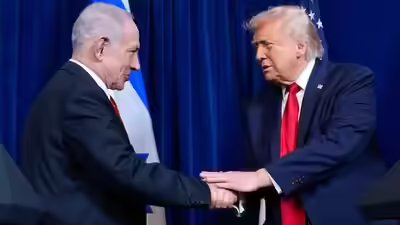
NEW DELHI: Israeli Prime Minister Benjamin Netanyahu on Monday rejected suggestions that US President Donald Trump influences his decisions, saying both leaders act independently and prioritise the interests of their respective countries.Speaking at the JNS International Policy Summit in Jerusalem, Netanyahu pushed back against perceptions in both Israel and the United States about the nature of his relationship with Trump amid ongoing developments in West Asia and growing scrutiny of US-Israel coordination.“In the United States, they say that President Trump does everything that I ask him to do. And in Israel, they say that I do everything he wants me to do. Well, neither is true. We’re leaders of independent and proud countries. We stand for our interests. I stand for the interests of Israel, and for its security. Often we see eye to eye. Sometimes we don’t. But we respect each other’s sovereignty and leadership and commitment to our people,” Netanyahu said.His remarks came amid reports of differences between Washington and Jerusalem over regional issues, including the evolving diplomatic process involving Iran. Netanyahu maintained that while the two governments often share common objectives, each country makes decisions based on its own national interests.The Israeli prime minister also reiterated his opposition to Iran acquiring nuclear weapons, saying political developments would not alter Israel’s position on the issue.“And with regard to Iran, whatever political developments may unfold, I will not allow Iran to acquire nuclear weapons. As long as I serve as Prime Minister of Israel, that will not happen,” he said.Netanyahu further claimed that Israeli military operations had prevented Iran from obtaining a nuclear weapon and removed what he described as an existential threat to Israel.“We prevented Iran from carrying out a plan to annihilate us, and today they would have had an atomic bomb to do so,” he said. “We prevented that from happening. We removed the existential danger. Had we not acted. Iran would have had atomic bombs, and let me tell you something, they would have used them.”Highlighting Israel’s military campaign against Iran, Netanyahu said Israeli and US actions had inflicted significant damage on Tehran’s nuclear and military capabilities.“We destroyed Iran’s nuclear infrastructure,” he said. “We knocked out 20 of their top nuclear scientists; 12 in Rising Lion, another eight in Roaring Lion.”“When you take out the scientists, it’s very hard to make a nuclear weapon,” he added.Netanyahu also claimed Israel had fundamentally changed its security doctrine through direct military action against Iranian targets.“For years, people told us, you cannot attack the soil of Iran,” he said. “We sent our brave pilots over the skies of Iran, and they took out targets, regime targets, terror targets, missile batteries, and missile sites, and nuclear sites.”“We changed Israel’s security doctrine. We initiate, we attack, we surprise, and we attack those enemies that seek our destruction, that seek to kill us; we attack them before they have a chance to do so.”The Israeli leader argued that recent military operations had weakened Iran’s regional influence and created conditions that could eventually threaten the survival of the Islamic Republic.“Because once you deal these blows and once the rift between the regime and people is so deep, you cannot tell when such a regime would fall,” he said.“I think we created the condition for it to fall. That is what will be the real triumph when the Iranian people take their own destiny in their hands, and they knock out this brutal regime that is terrorising them and terrorising the rest of the world.”Netanyahu also pointed to Israeli operations against Hezbollah in Lebanon and other Iran-backed groups, saying Israel would continue maintaining security zones where necessary to protect its citizens.The remarks come as US and Iranian negotiators continue talks in Switzerland aimed at implementing a ceasefire framework and discussing broader issues including regional security, sanctions and Iran’s nuclear programme.