
Quote of the day by James Clerk Maxwell: “Thoroughly conscious ignorance is the prelude to every real advance in science.” |
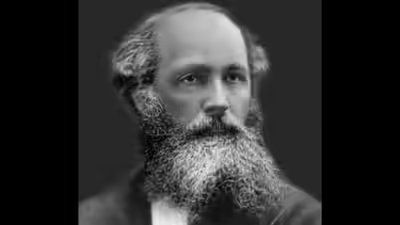
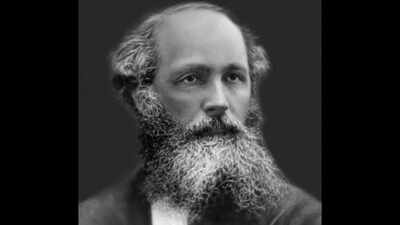
In 1928, a Scottish farmer named Hugh Fleming noticed something unusual in his laboratory. A dish containing bacteria had been contaminated by mould. Normally, that would have been a reason to throw it away and start again.Instead, he stopped and looked more closely.The scientist, better known to history as Alexander Fleming, realised that the mould appeared to be killing the bacteria around it. That observation eventually led to the discovery of penicillin, one of the most important medical breakthroughs of the twentieth century.Stories like this appear throughout the history of science. They often begin in the same place: uncertainty.Not certainty. Not expertise. Not confidence.Uncertainty.Someone notices something that does not make sense. A question appears. An accepted explanation suddenly feels incomplete.More than a century before modern antibiotics, Scottish physicist James Clerk Maxwell captured that idea in a single sentence. His words remain striking because they challenge a belief many people carry from childhood, namely that intelligence means always having the answer.Maxwell saw things differently. He believed progress begins when people become aware of what they do not know.
Quote of the day by James Clerk Maxwell
“Thoroughly conscious ignorance is the prelude to every real advance in science.”
The quote sounds almost contradictory. How can ignorance lead to progress?Maxwell was not talking about refusing to learn or rejecting knowledge. He was talking about recognising the boundaries of knowledge.Scientists rarely wake up in the morning and discover something new because they feel certain. More often, they encounter a puzzle that existing knowledge cannot explain.That gap becomes the starting point.The quote is really an argument for intellectual honesty. It suggests that people move forward when they stop pretending that every mystery has already been solved.
What is the meaning of “thoroughly conscious ignorance”?
A few years ago, an astronaut was asked what surprised him most about seeing Earth from space.His answer was not about technology or engineering. It was about perspective.From hundreds of kilometres above the planet, many assumptions suddenly seemed small. Questions became larger. The unknown felt larger too.That reaction appears repeatedly among people who spend their lives exploring complex subjects. The deeper they go, the more they realise how much remains beyond their understanding.This is what Maxwell was describing.A student beginning a physics course may think the subject is a collection of formulas and facts. A professional physicist often sees something different. Behind every answer sits another question.What is dark matter? What happened before the Big Bang? Are there limits to what humans can ever know? Science continues because mysteries remain. The same pattern appears outside laboratories.A business owner entering a new market quickly discovers there is more to learn than expected. A parent raising a first child finds that no book contains every answer. A journalist investigating a story often begins with little more than a question and a notebook.The willingness to acknowledge uncertainty becomes an advantage rather than a weakness.That is the heart of Maxwell’s message.People rarely learn much from subjects they believe they have already mastered.