
In 1991, hikers found a frozen body in the Alps: Decades later, scientists confirmed it belonged to a man murdered 5,300 years ago |
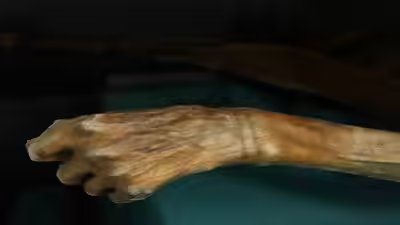
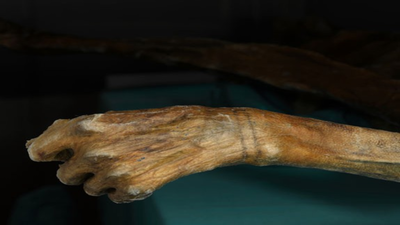
When German hikers Helmut and Erika Simon stumbled upon a body protruding from melting ice in the Alps in September 1991, they assumed they had discovered the remains of an unfortunate mountaineer.In reality, they had found one of the most significant archaeological discoveries of the modern era.Found at an altitude of about 3,200 meters near the Tisenjoch pass on the present-day border between Italy and Austria, the well-preserved body was later identified as a man who had died more than 5,300 years ago.Named Ötzi, after the nearby Ötztal Alps, the mummy has since provided scientists with an unparalleled insight into life, health, violence and migration in Europe during the Copper Age. According to research cited by the Smithsonian Institution, radiocarbon dating placed Ötzi’s death at some point between 3350 BCE and 3105 BCE, making him Europe’s oldest naturally preserved human mummy and one of the most valuable archaeological findings ever recorded.The arrow that unlocked a decades-long mysteryFor years following the discovery, researchers theorised that Ötzi may have died from exposure, succumbing to the brutal mountain environment.This theory collapsed in 2001 when a routine X-ray revealed a flint arrowhead lodged deep in his left shoulder. Further analysis determined that the projectile had severed a major artery, a mortal wound that almost certainly led to Ötzi’s death in a short period. Scientists also discovered evidence that Ötzi was involved in a violent struggle shortly before he died. A deep gash on his right hand appeared to have been inflicted one or two days earlier, suggesting a confrontation with another individual before his fatal shooting.Most researchers now believe that Ötzi was ambushed and shot from behind as he crossed the mountain pass, transforming him into one of the oldest known homicide victims ever discovered.Scientists even know what Ötzi was eating before he diedMore than five millennia after his death, researchers have recreated a surprisingly detailed picture of Ötzi’s final meal. A 2018 analysis of his stomach contents revealed that he consumed meat from Alpine ibex and red deer along with einkorn wheat, one of the first grains to be cultivated. The meal was exceptionally high in fat content, indicating it was probably designed to provide a quick source of energy for travelling in mountainous regions.Traces of bracken fern were also found in his stomach, a plant that would not normally have been considered food. It’s believed that Ötzi may have been using it to treat intestinal worms, given that other findings revealed he suffered from such parasites.The study provided a remarkably intimate snapshot of a single day in the life of a man who lived more than fifty centuries ago.
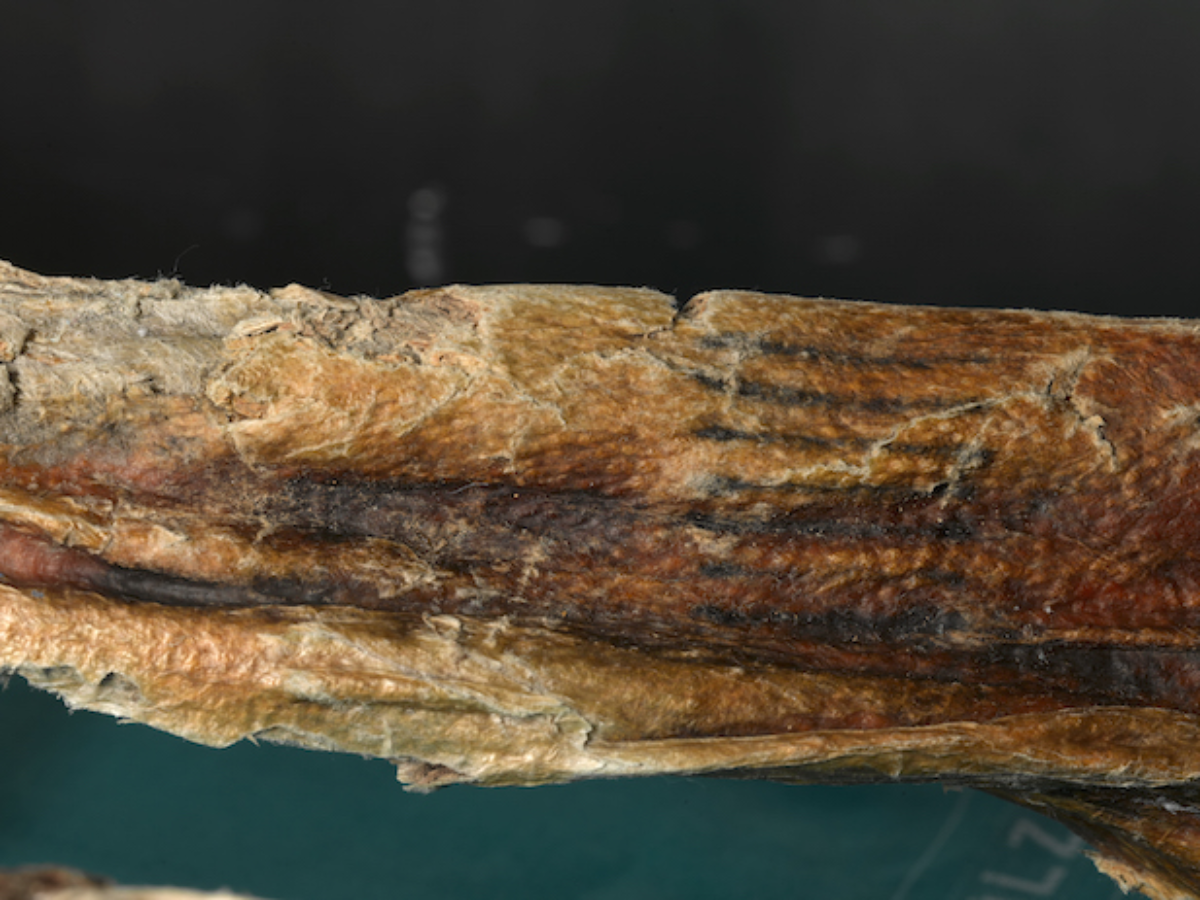
Tattoos on the body of Ötzi, the Tyrolean Iceman. Image Credit: Smithsonian Institution
The world’s oldest known tattoosÖtzi’s body bears 61 tattoos, widely regarded as the oldest known tattoos preserved on a human body.Unlike many modern tattoos, the markings consist largely of straight lines and small crosses made by rubbing charcoal into tiny incisions in Ötzi’s skin.They are distributed across his lower back, legs, wrists, abdomen and chest. Fascinatingly, they appear in locations corresponding with points that scans later indicated to be affected by degenerative joint disease and other ailments.Led by a team of experts at Eurac Research’s Institute for Mummy Studies, a group of scientists has argued that Ötzi’s tattoos were therapeutic rather than aesthetic, possibly indicating an early form of pain relief. A number of researchers have pointed to their correlation with acupuncture points, though this theory remains speculative.A remarkably comprehensive health reportModern science has also developed a detailed medical profile of Ötzi.Studies have determined that he was approximately 45 years old at the time of his death, 160 centimetres tall, and weighed about 50 kilograms.Researchers found evidence that Ötzi suffered from arthritis, gum disease, cavities, digestive disorders, intestinal worms, and had a genetic predisposition to cardiovascular disease. In other words, despite a lifestyle that involved regular travel in the Alps, he experienced a range of chronic conditions that will be familiar to many people today.Living relatives may still be among usPerhaps the most surprising discovery of all concerns Ötzi’s genetic legacy.Researchers at the Institute of Forensic Medicine in Innsbruck found that among thousands of Austrian blood donors tested, several carried a rare Y-chromosome signature that Ötzi also possessed. The G-L91 marker, which is inherited solely through the paternal line, signifies that they are distantly related and share a common ancestor.The study concluded that the men shared Ötzi’s male line and that, despite the thousands of years that separate them, they share a distant paternal lineage with Ötzi and likely descend from a common male ancestor.New face of the Iceman revealed through DNAThe latest research was published in 2023 and came from the Max Planck Institute for Evolutionary Anthropology and Eurac Research, which re-sequenced Ötzi’s genome using cutting-edge technology.Their findings, according to ScienceDirect, suggested that Ötzi’s skin colour was much darker than previously assumed and that he already suffered from male-pattern baldness when he died. They also determined that his ancestry was largely derived from early Anatolian farming populations and that his DNA differed significantly from that of other European inhabitants of his era.More than three decades after his chance discovery, Ötzi continues to redefine our understanding of prehistoric Europe. Frozen in the Alps for millennia, he remains a unique figure in archaeology, with his last hours, medical condition, genealogy and death still under study