The 163-year journey that explains AI’s greatest challenge

We often talk about artificial intelligence as if it represents a complete break from the past. Yet one of AI’s most important challenges may be rooted in a debate that began nearly two centuries ago.
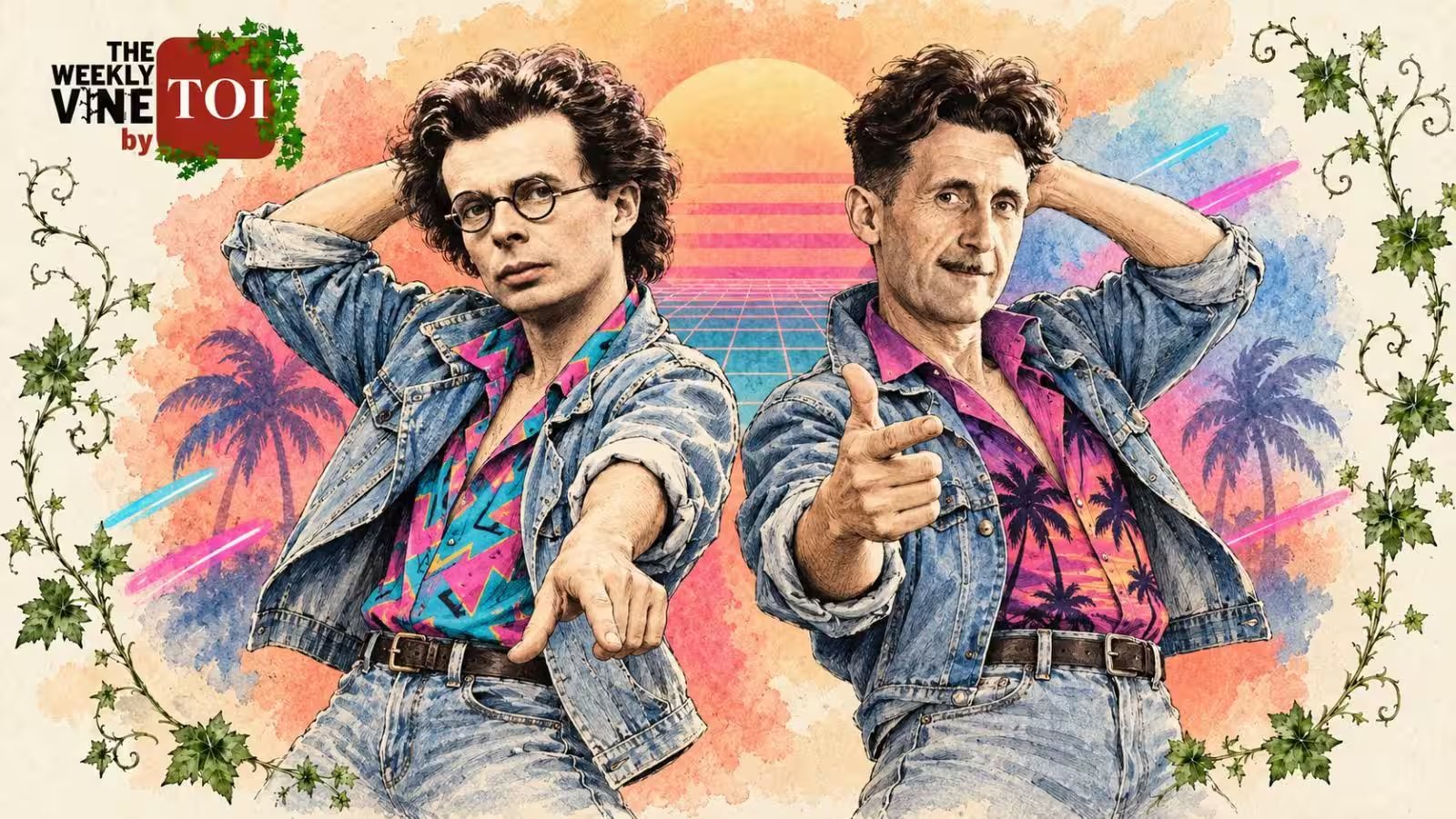
In 1841, Charles Mackay, the Scottish journalist and author, published *Extraordinary Popular Delusions and the Madness of Crowds*. His work documented how collective human behaviour can produce irrationality, speculation, panic and mass delusion. Mackay’s observations remain relevant today because they highlight a recurring feature of human societies: groups do not always make wise decisions simply because many people believe the same thing.
One hundred and sixty-three years later, in 2004, James Surowiecki published *The Wisdom of Crowds*. Surowiecki presented a seemingly opposite argument. Under the right conditions, he showed, groups can be remarkably intelligent and often outperform individual experts. Diversity of opinion, independence of thought and decentralised decision-making can produce outcomes that are surprisingly accurate and effective.
It took humanity 163 years to fully appreciate that both perspectives could be true at the same time.
Before AI entered public consciousness, the internet had already begun demonstrating this paradox. Flash mobs offered an early glimpse of how large groups of strangers could coordinate around a shared idea with little or no hierarchy. Sometimes the result was creativity, joy and collaboration. At other times, similar dynamics encouraged conformity, confusion or irrational behaviour. The phenomenon revealed how thin the line can be between collective intelligence and collective delusion.
The arrival of social media accelerated these dynamics dramatically. Ideas, opinions and emotions could now spread across the world in minutes. What Mackay observed over years could unfold within hours. What Surowiecki described as collective intelligence could emerge at unprecedented scale. The underlying human behaviour did not change; the speed and reach did.
Artificial intelligence now enters this story at a critical moment — and it carries a profound irony at its core. AI is not observing the wisdom and madness of crowds from a distance. It is being trained on both. Every book, article, research paper, conversation, social media post and digital interaction contributes to the vast body of human knowledge from which AI learns. As a result, AI inherits not only our intelligence and creativity, but also our biases, misconceptions and collective blind spots.
This is why the future of AI is not fundamentally a story about machines replacing humans. It is a story about machines learning from humanity’s largest and most complex dataset: humanity itself.
AI will not have the luxury of taking 163 years to understand what humanity learned over generations. Its challenge is to distinguish, in real time, when collective behaviour is generating insight and when it is generating error. The future of AI may depend less on its ability to process information and more on its ability to separate signal from noise, wisdom from popularity, and truth from consensus.
Mackay showed us how crowds can fail. Surowiecki showed us how crowds can succeed. Flash mobs demonstrated how quickly people could self-organise. Social media amplified those dynamics to planetary scale. AI now inherits all of these lessons — and all of these liabilities.
**AI Turns Up the Heat on Campuses**
Nowhere is this tension more visible than in the growing crisis of confidence around higher education. For decades, the university degree functioned as society’s most trusted signal of collective wisdom — a credential that compressed years of accumulated knowledge into a transferable mark of capability. Employers trusted it. Governments funded it. Families sacrificed for it. The degree, in Surowiecki’s terms, was the crowd’s verdict on individual readiness.
AI is now exposing how much of that verdict was assumption rather than evidence. When a graduate-level analytical task can be performed in seconds by a language model, the question facing campuses is no longer what students know, but what they can do that AI cannot. The degree-capability gap — the growing distance between what a qualification promises and what a graduate can actually deliver — has always existed quietly. AI has made it loud.
This is crowd wisdom meeting its own blind spot. Universities, as institutions, represent centuries of codified collective intelligence. Their curricula, their assessment models, their very notion of what constitutes an educated person, were shaped by consensus built over generations. But consensus, as Mackay warned us, is not the same as truth. When the environment changes faster than the consensus can adapt, the wisdom of the crowd becomes the inertia of the crowd.
The students caught in this transition are not merely facing a skills gap. They are facing a signal crisis. In a world where AI can produce the outputs that degrees were designed to certify, the value of human capability must be redefined — not by institutions alone, but by the same distributed, diverse, independent thinking that Surowiecki identified as the source of genuine collective intelligence. The campuses that survive and matter will be those that stop asking what students have learned and start asking what students can create, judge, and take responsibility for — things that remain, for now, irreducibly human.
1841 gave us the madness of crowds. 2004 gave us the wisdom of crowds. The AI era may be remembered as the moment we discovered which side scales faster — and whether the machines we built from both can tell the difference.
Disclaimer
Views expressed above are the author’s own.